The story
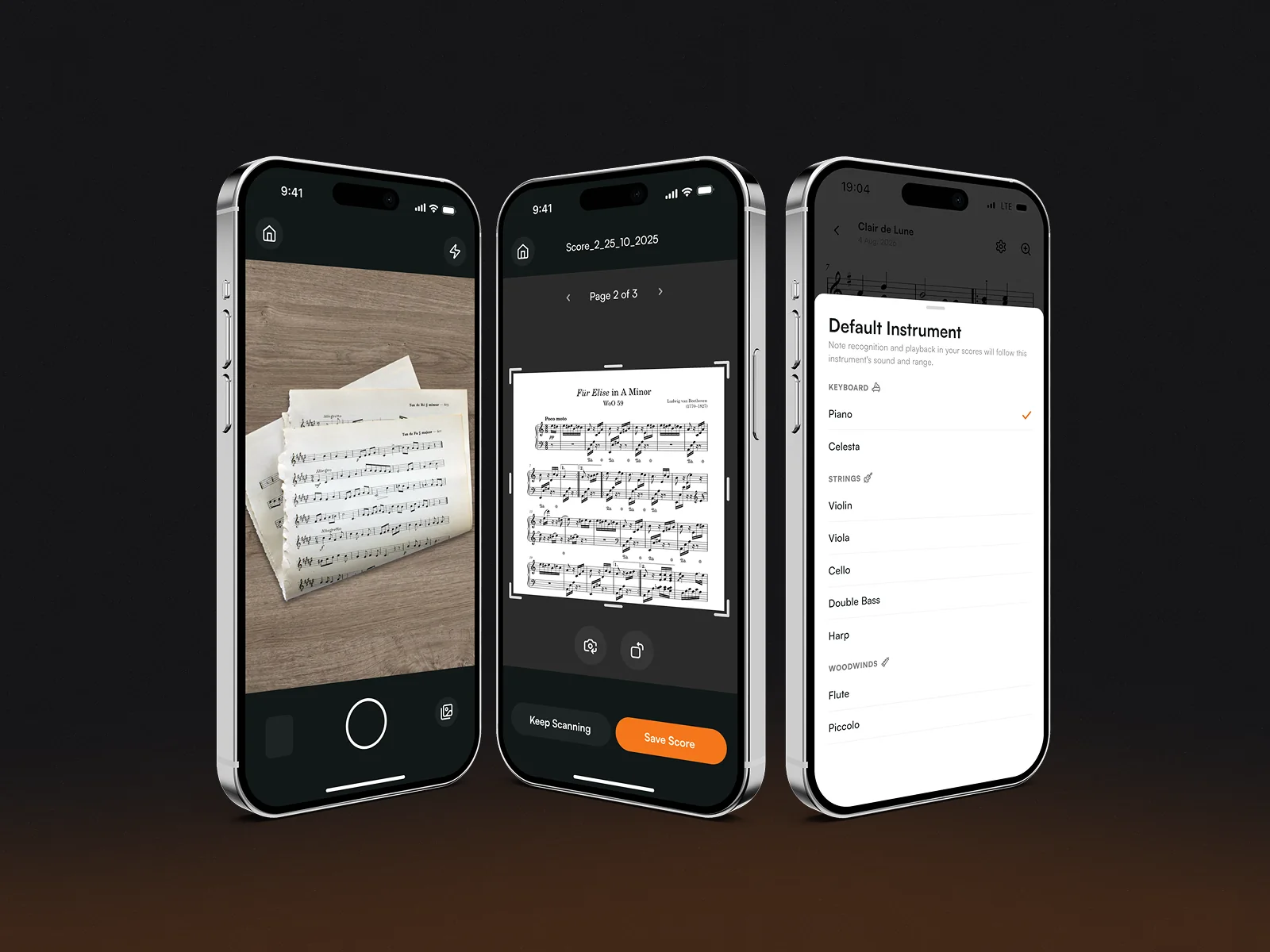
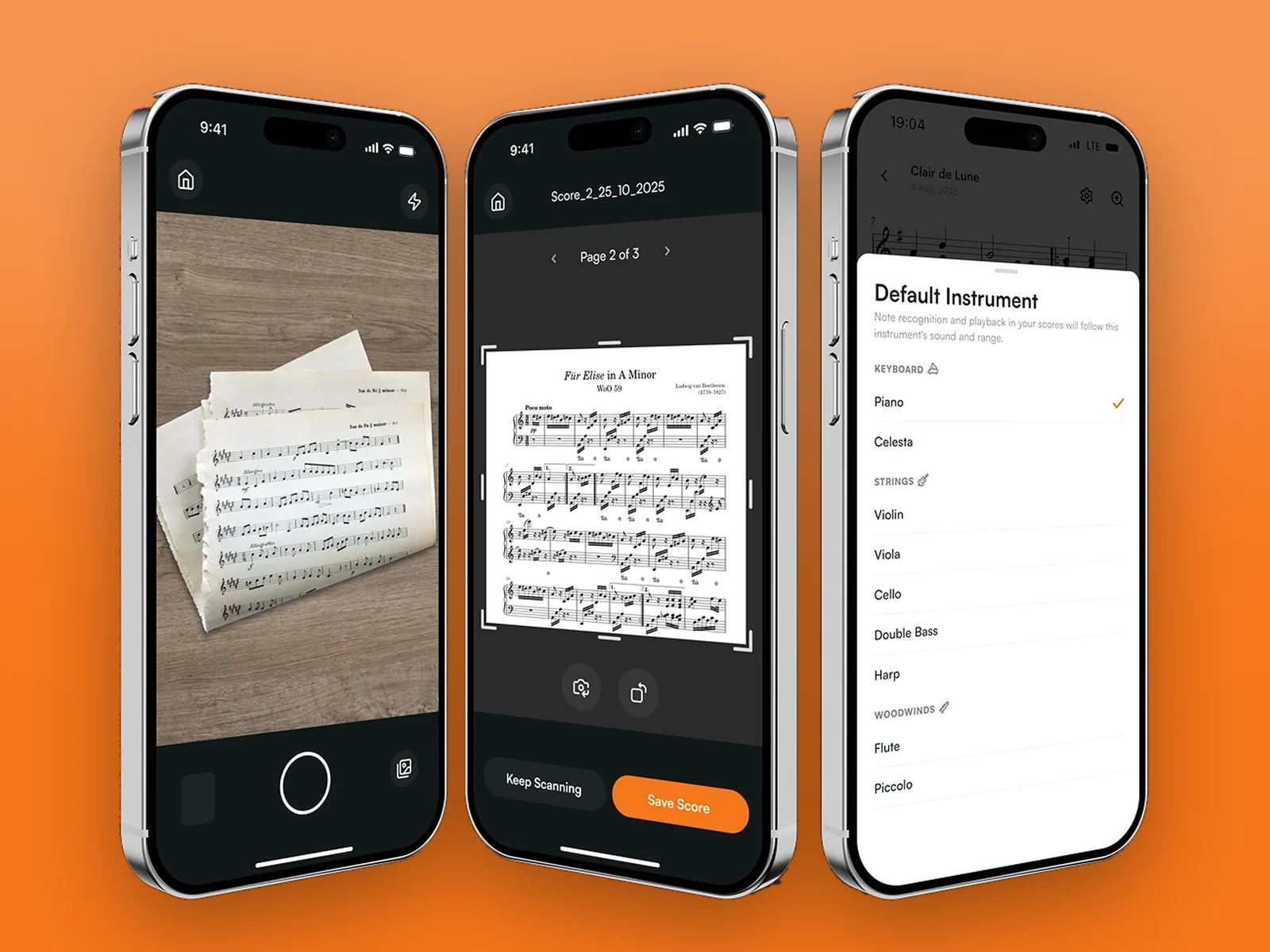
Rhythm Reader is for musicians who arrive at practice with sheet music scattered across folders, bags and the piano lid. You scan the whole pile once and it lives in the app, ready to open on an iPad, a phone, or whatever device is nearby.
The challenge was reading the music itself. No reliable tool exists for recognising sheet music, and the problem is niche enough that nobody had built one, so most of the project went into research. Our team's own musical background helped with the judgement calls.
Once recognition worked, everything else followed: playback that matches the instrument the player picks, export, a searchable score library and a community feed.
What was hard, and how we solved it
Problem
Reading lags behind playing
Plenty of musicians play by ear beautifully but read a printed page far too slowly to keep up.
A page with no sound
A part on paper gives no idea how it should sound until somebody else plays it out loud.
Hard passages stay hard
Drilling one tricky bar means scrubbing through a recording or finding a person to play it for you.
Solution
Photograph and hear it
A photo of the page becomes real notation that plays itself back, one page or a whole score.
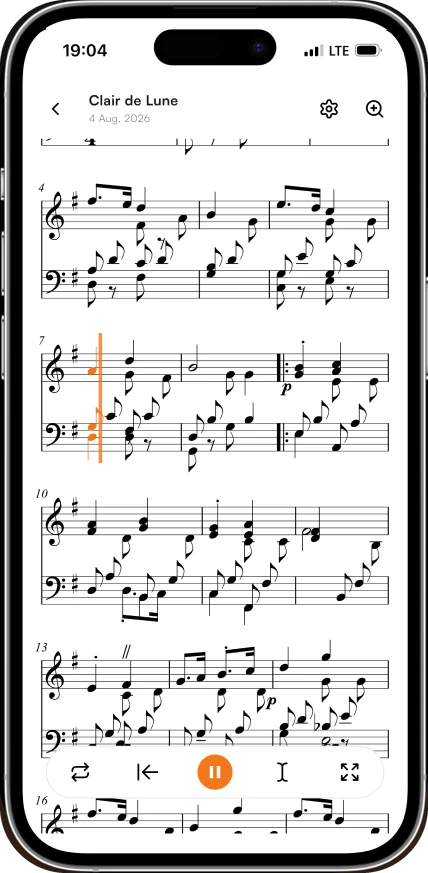
Notes light up as they sound
The highlight follows the playback, so you always know where you are on the staff.
Loop any section
Select a passage, drill it on repeat, and hear it played back on your own instrument's sound.
Inside the app