Long story short
An Estonian MedTech startup needed a skin-check app built from scratch. We designed it and built it in Flutter in under eight weeks: a 3D body model that runs on the cheapest phones, sharp photos for the AI, and 10k+ users after soft launch.
- 10k+Users after soft launch.
- <8 weeksDevelopment, from scratch.
- 3D bodyRuns smoothly on the cheapest phones.
- One codebaseFlutter for iPhone, Android and tablet.
- What we did
- Product design
- Flutter app
- 3D body model
- Photo capture and checks
- AI integrations
- Store launch
- Stack
- Flutter
- Third-party skin-analysis API
- Chatbot API
- Custom 3D body model
- Team
- Product designer and PM
- Full-stack mobile developer
- Get the app
About
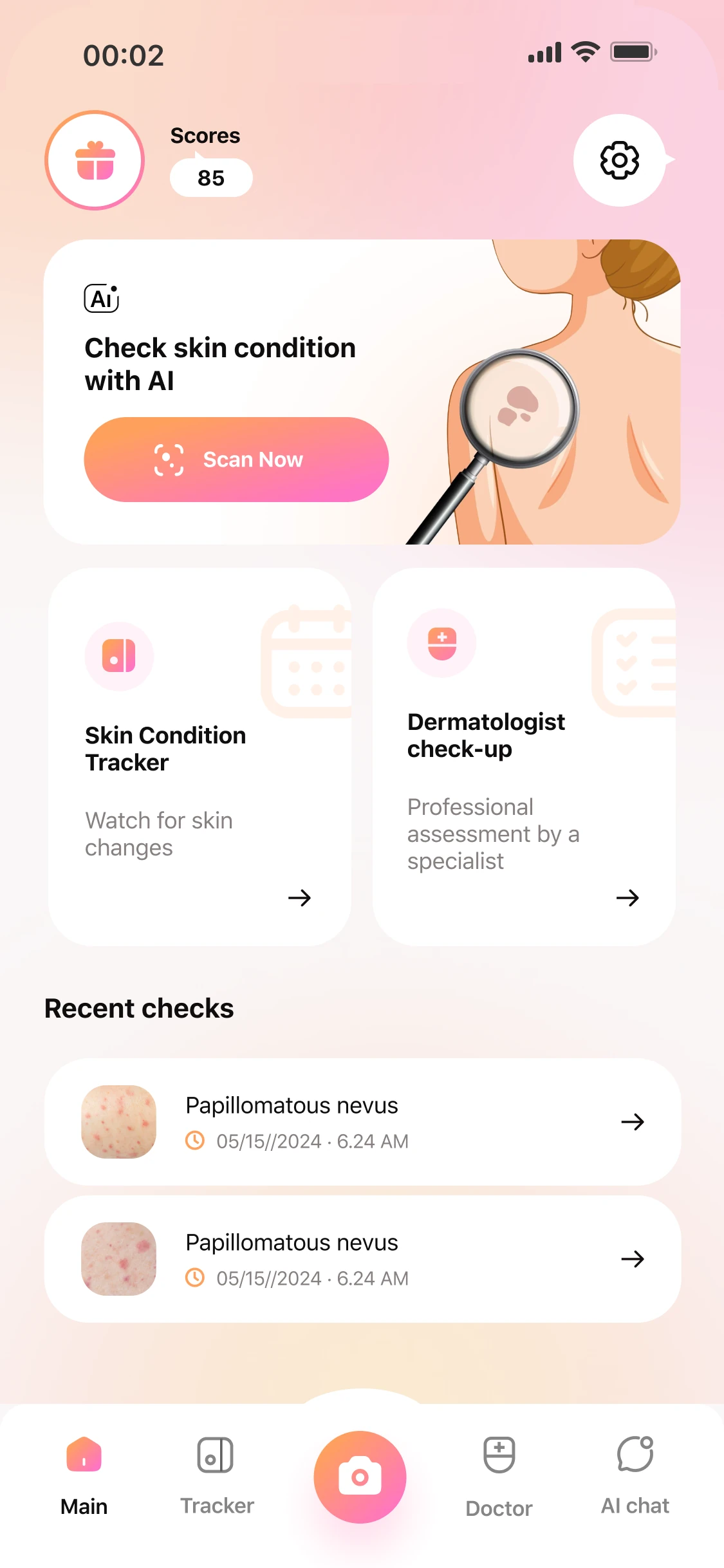
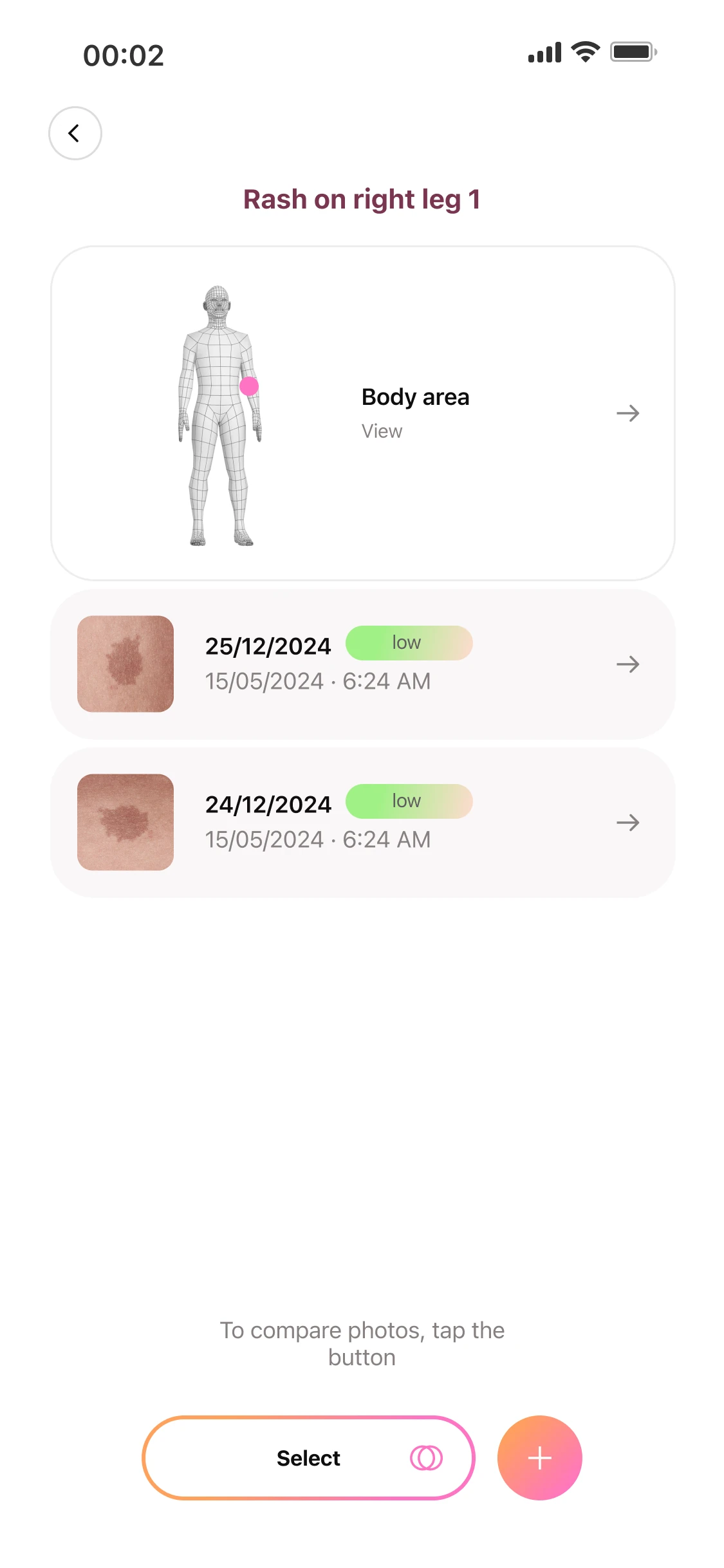
SkinAI+ helps people keep an eye on their skin between doctor visits. You photograph a mole or a spot, the app sends the picture to a skin-analysis service and shows what it found, and you mark the spot on a 3D model of your body to track it over time.
A chat assistant answers questions, and reminders bring you back for the next check. The app says plainly what it is: a tool for awareness and pre-screening, not a medical device. It runs on iPhone, Android and tablets.
The challenge
The startup needed the whole product, designed and built from scratch, and fast.
First, the 3D body model. People mark their spots on it and come back to them for months, so it has to feel smooth. And it had to run on the slowest phones on the market, not just flagships: many people who need a skin check don't own a new phone.
Second, the photos. The analysis is only as good as the picture it gets. A blurry or dark photo gives a useless answer, and people take these photos at home, in bathrooms and bedrooms, with whatever light they have.
Then the stores. A medical app gets a stricter review than most, and the launch had to get through it.
What we did
- Design
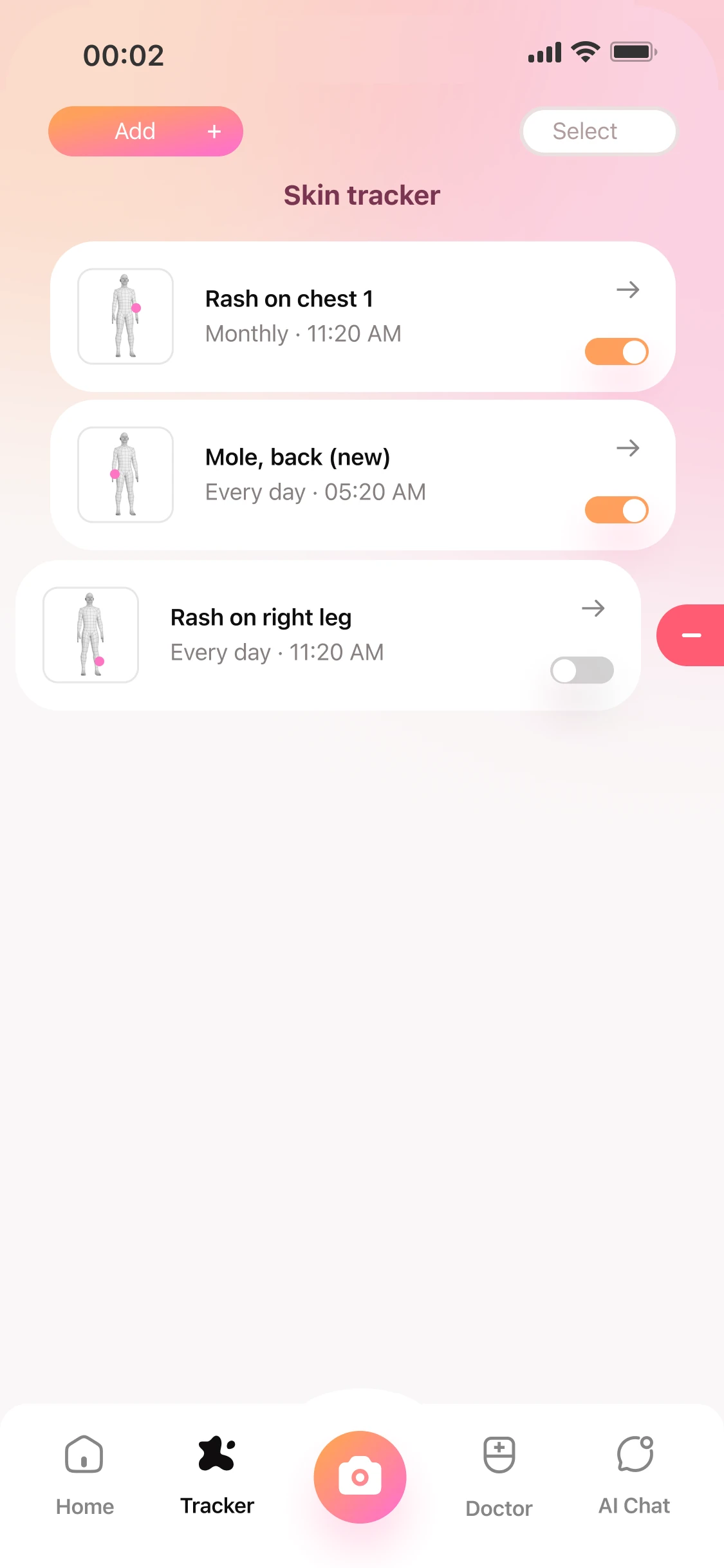
- Our product designer shaped the app with the client: the home screen, the skin tracker, the 3D body, the camera flow with its instructions, the chat and the reminders.
- 3D body
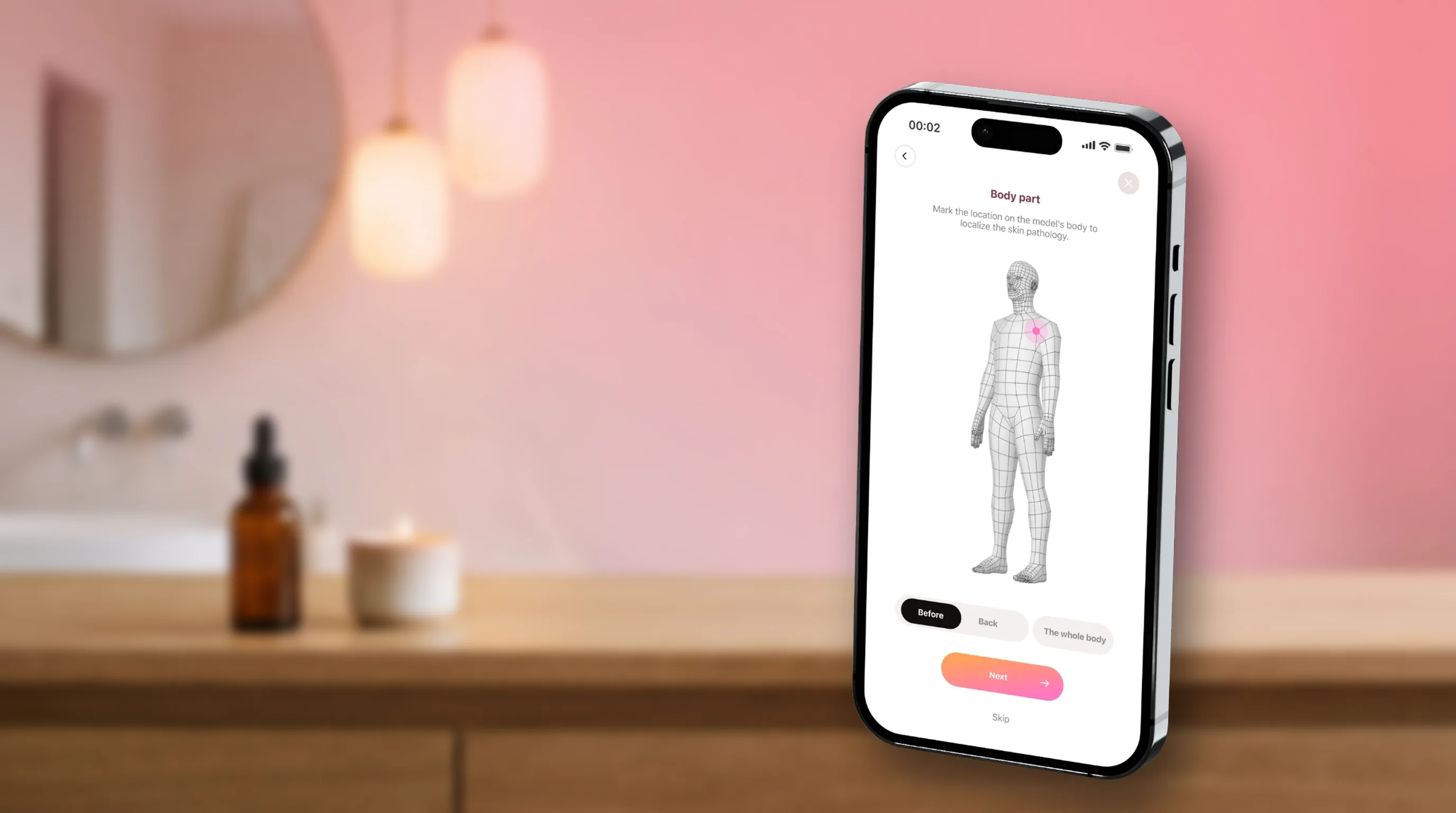
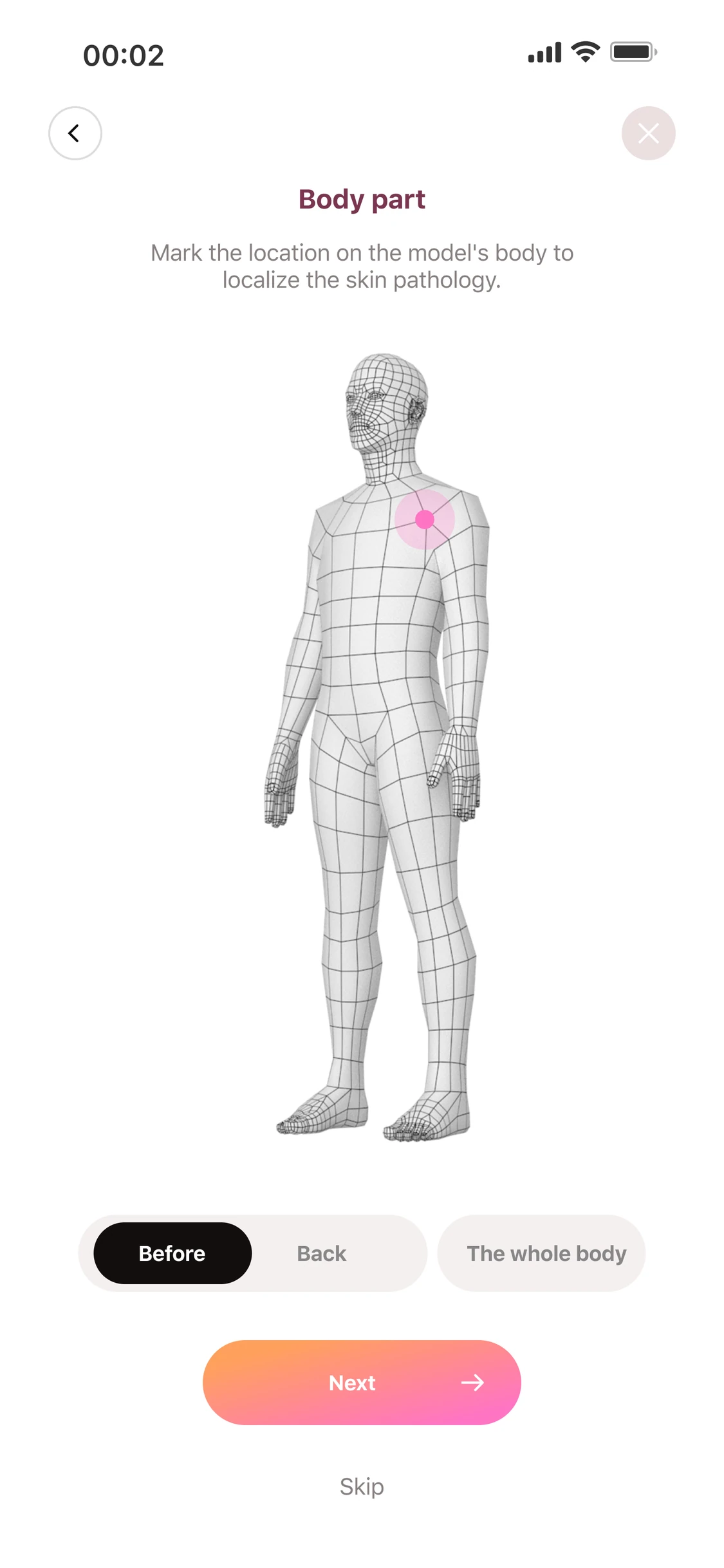
- A custom model people can turn and tap: front, back or the whole body. Each spot gets its place on the body and its own history.
- Camera
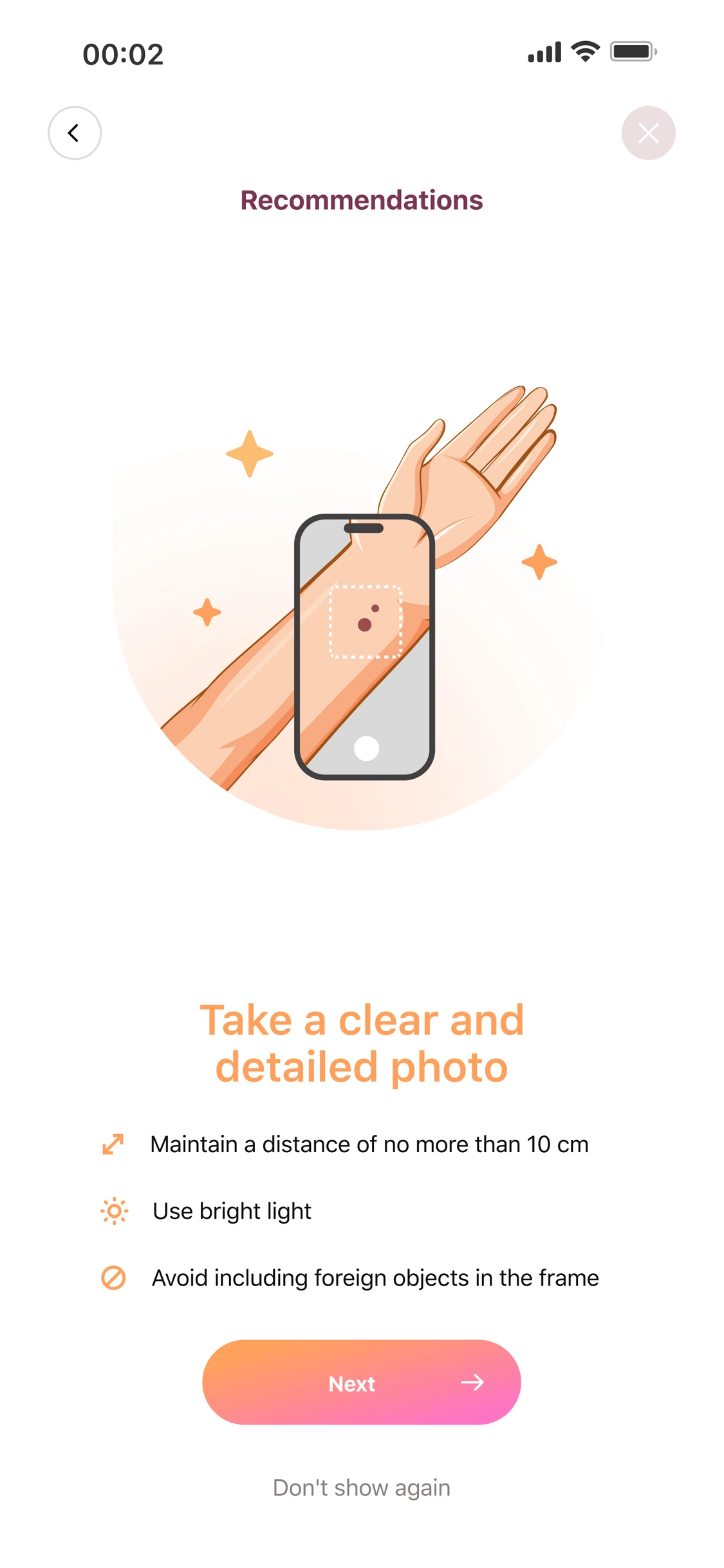
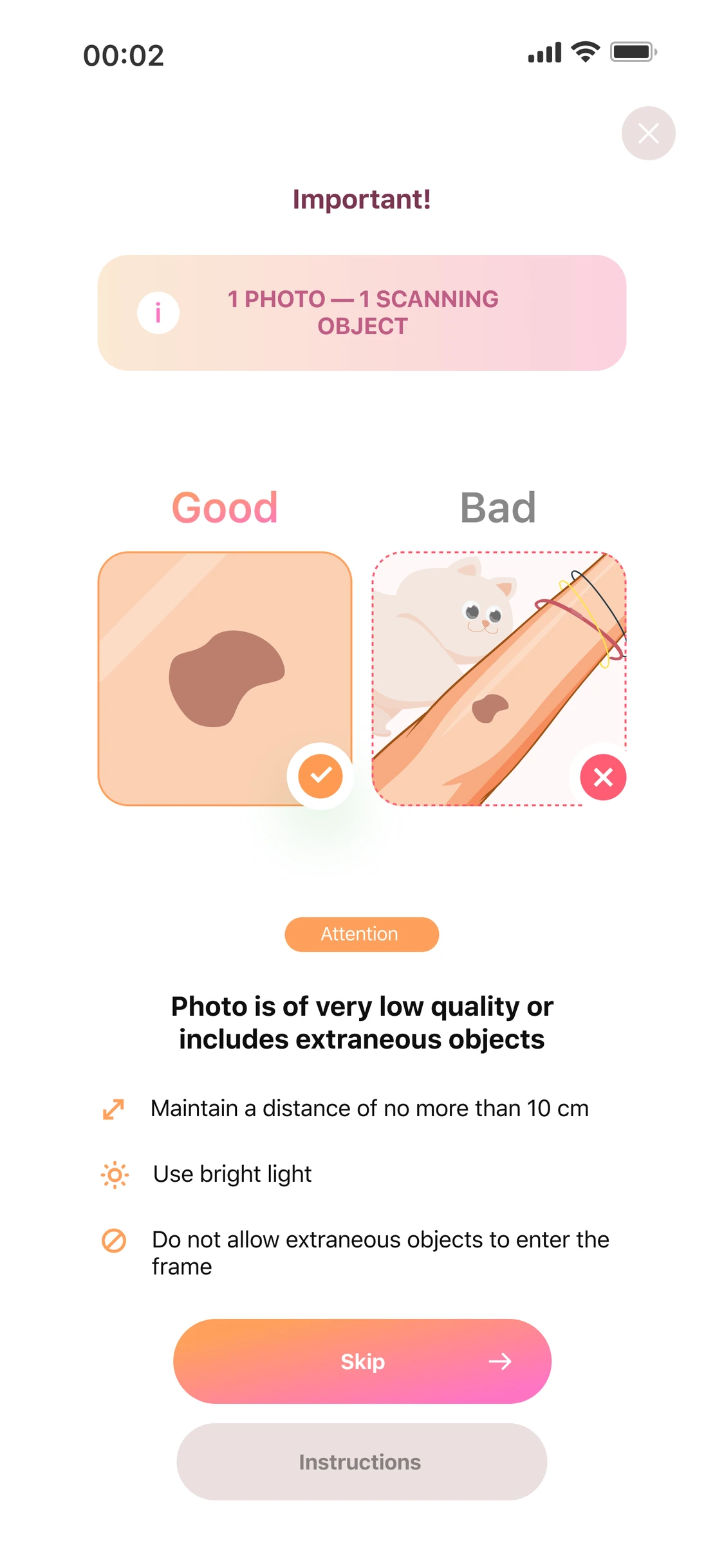
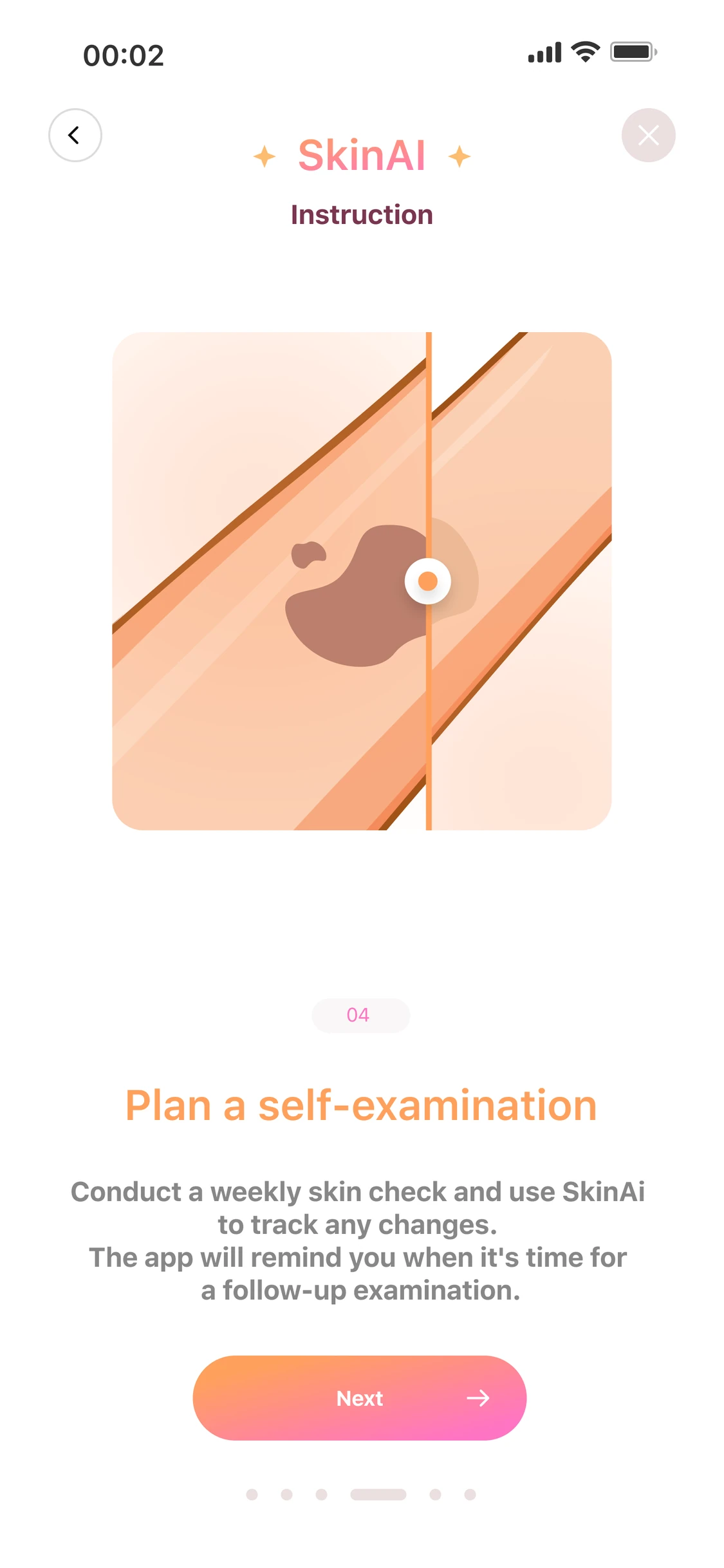
- Before a photo goes to the analysis service, the app makes sure it is usable: in focus and well lit. Step-by-step instructions show how to take it.
- In focus
- Bright light
- No more than 10 cm away
- One spot in the frame
- AI
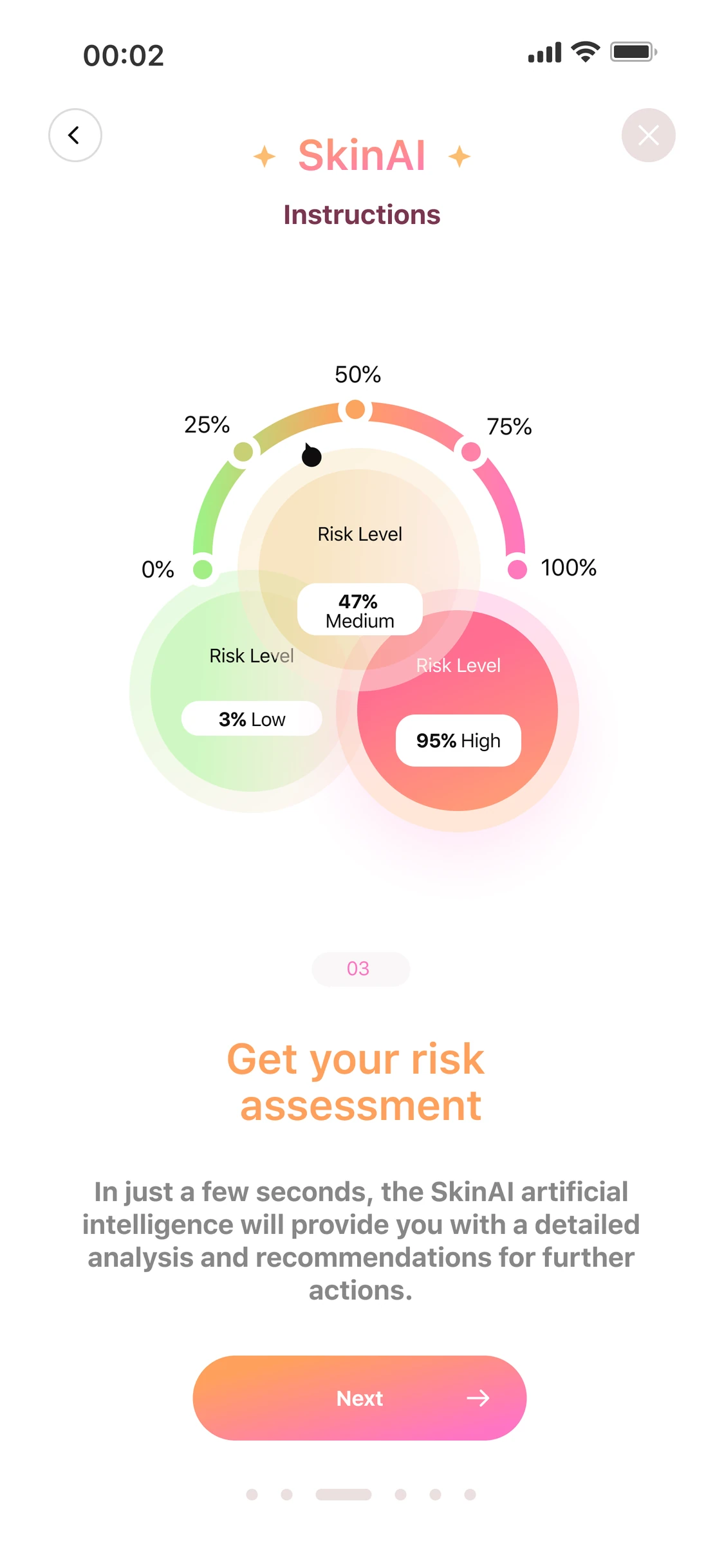
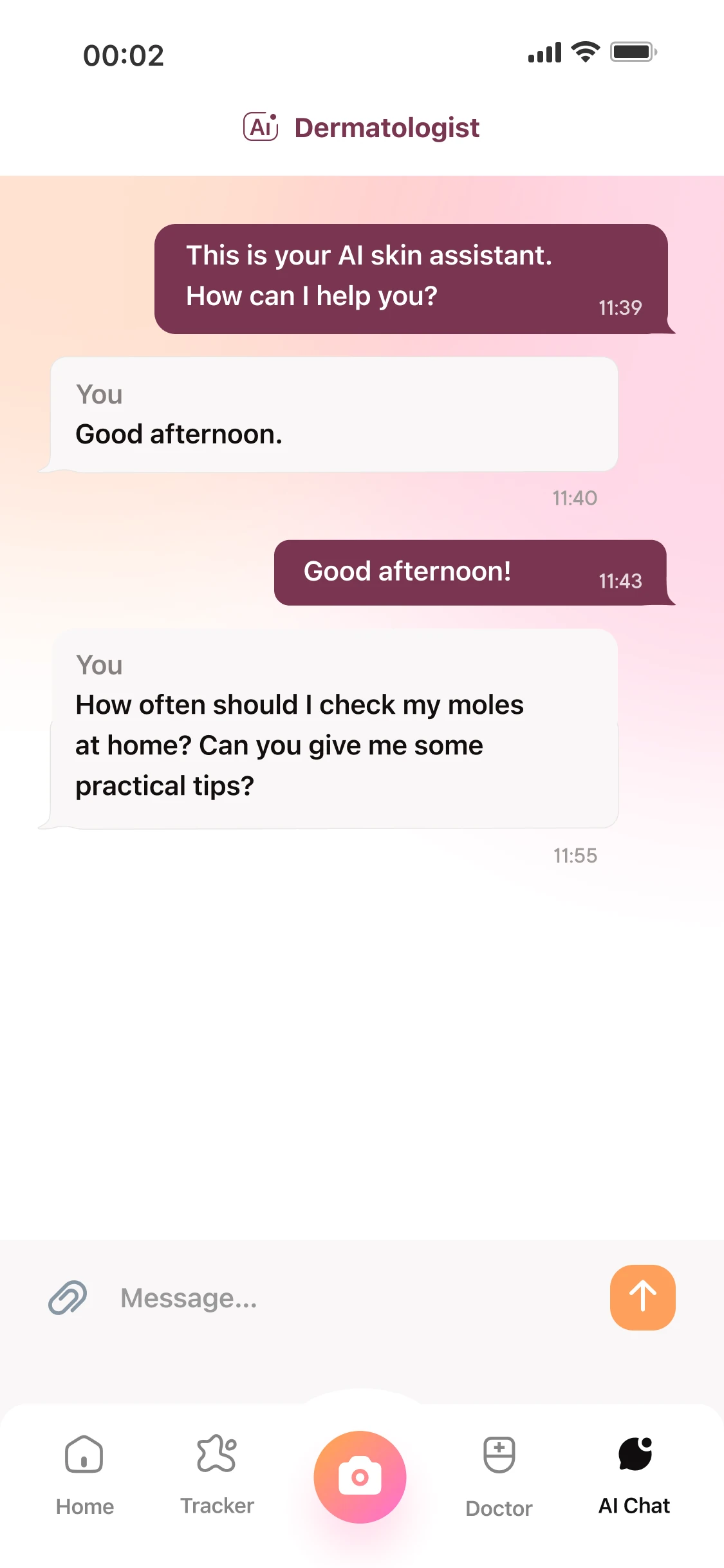
- The skin analysis is a third-party API, and a chatbot API powers the assistant. We wired both into the app and built everything around them.
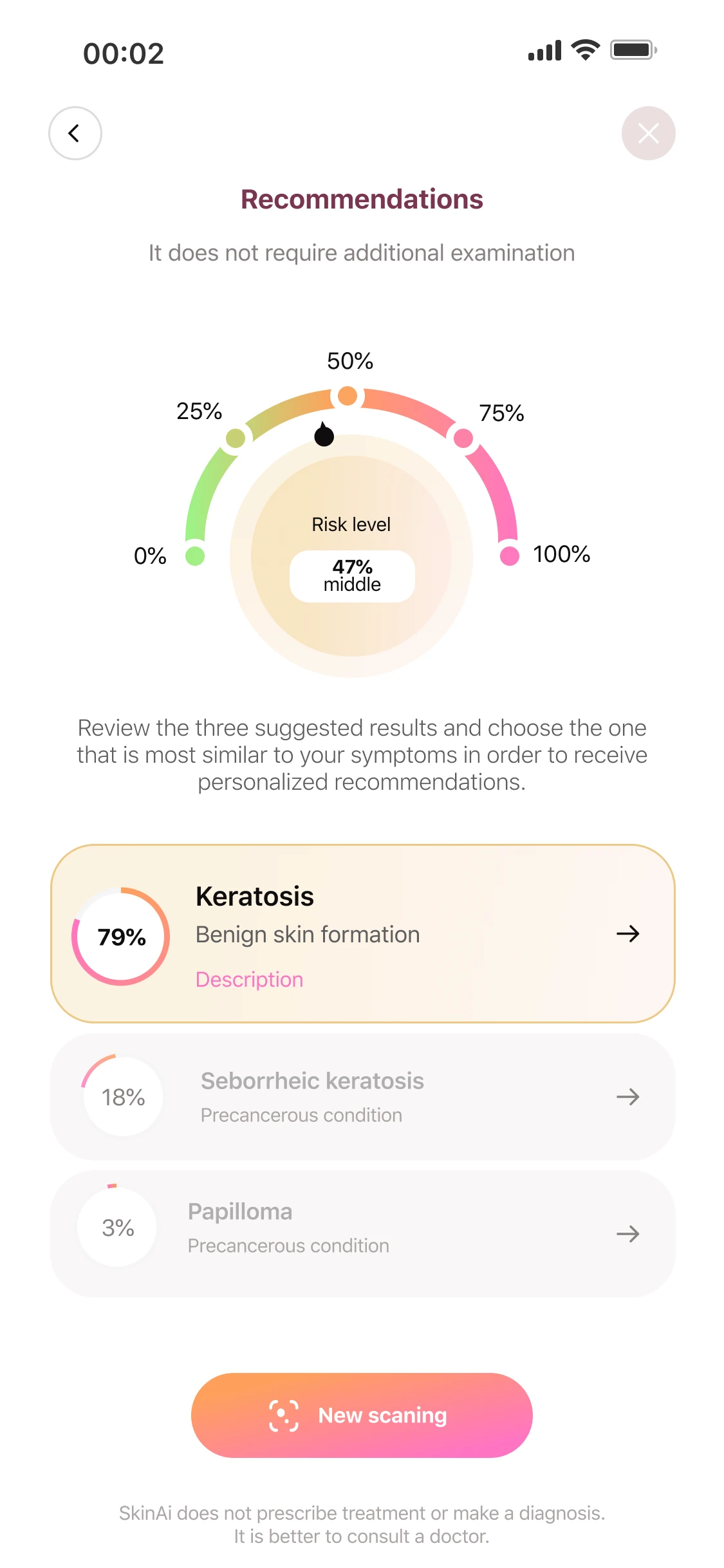
- Reminders
- The app reminds people to run their next self-check and gives points for keeping it up.
- Launch
- One Flutter codebase for iPhone, Android and tablet. Development took under eight weeks; the medical store review took the launch to three months.
The hardest problem
A 3D body that runs on the cheapest phone.
The 3D body model is the heart of the app: people find the spot on their body, tap it, and come back to it. It has to turn smoothly and respond at once. On a flagship that is easy.
The client wanted it to work on the slowest phones on the market too, because a skin check shouldn't depend on owning a new phone. We researched rendering performance before we settled on an approach, then kept the model light enough for low-end devices without losing the detail people need to place a spot.
Body part
Tap a spot to see its history.
Spot history
Left shoulder
- Checks
- 3 checks
- Last check
- 12 days ago
- Next reminder
- In 18 days
Redrawn in code for this page. Sample spots, not real data.
A pure technical win. By 2025 our process was already in place: a small senior team, design and build moving together, development done in under eight weeks.
Free clickable prototypeKey insights
- 01
Build for the slowest phone.
The 3D model runs smoothly on low-end devices, so everyone can use the app, not just people with flagships.
- 02
Good AI starts with a good photo.
We make sure every picture is sharp and well lit before it reaches the analysis service.
- 03
Plan for the review.
A medical app gets a stricter store review. Development took under eight weeks; the review took the launch to three months.
Proof
- 10k+ Users after soft launch
- <8 Weeks of development, from scratch
- 3 Months to the published app, through the medical store review
“We've worked with a lot of sub-contractors, and those guys are the best so far! Excellent project management and high dev quality.”