
Long story short
A US fitness startup asked us to design and build a marketplace for personal trainers. We built it for iOS and Android, rebuilt its billing once we learned how trainers really get paid, and launched it on both stores.
- iOS + AndroidOne Flutter codebase, live on both platforms.
- Two rolesTrainers run their business. Clients book, pay and train.
- PrepaidCredit per trainer through Stripe, with auto top-up, Apple Pay and Google Pay.
- WidgetsHome and lock screen widgets on iOS.
- What we did
- Discovery
- UX/UI design
- Flutter app
- Backend and admin panel
- Payments
- Store launch
- Stack
- Flutter
- Firebase
- Stripe
- Team
- Designer and PM
- Backend developer
- Two Flutter developers
- QA
- Get the app
About
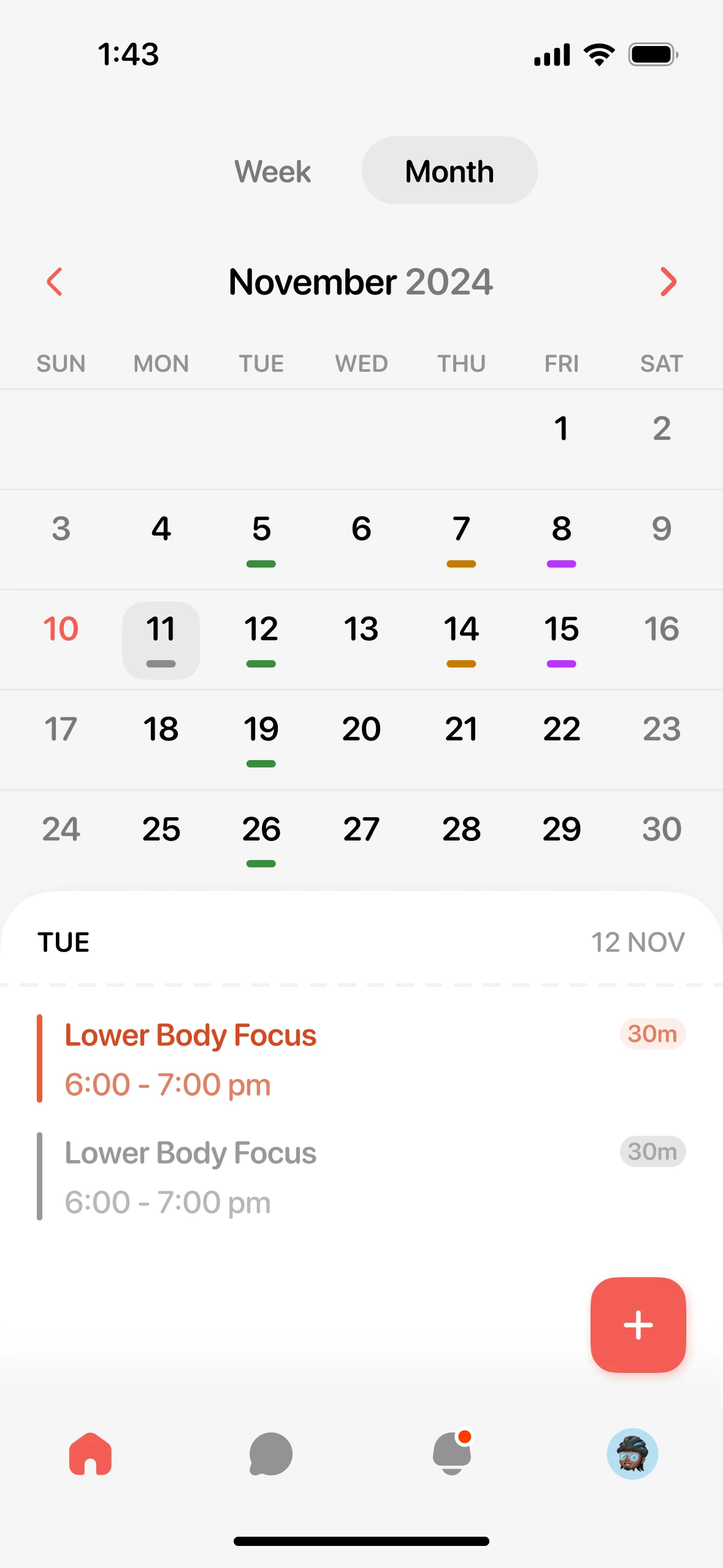
Regent is a marketplace app for personal trainers and their clients. A trainer sets weekly hours, invites clients with a QR code or a link, and runs bookings, payments, workout and meal plans and chat from one place.
A client books sessions, keeps a prepaid balance with each trainer, and follows the plan between sessions. An admin panel sits behind both.

The challenge
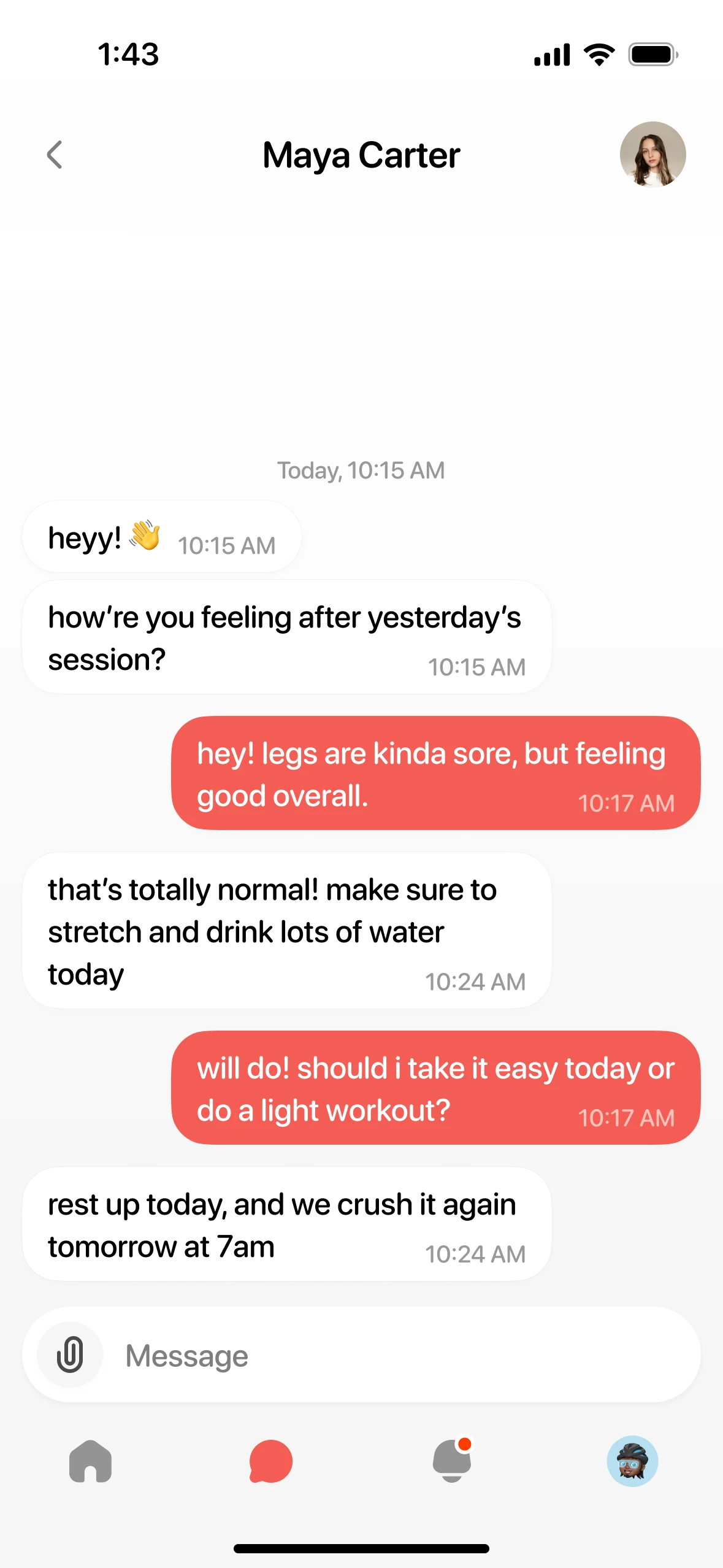
A trainer’s business runs on three things: the calendar, the money and the reminders. Regent had to get all three right for two kinds of user at once.
Sessions are private or group, one-off or recurring, and any of them can be moved, cancelled or missed. Each change touches money: who owes what, what comes back, when a card is charged. And each change has to reach the right person at the right time.
Trainer · this week
Reminder sent HIIT, group · in 1 h
-
Mon20
- 07:00 Strength Private Done
- 12:00 Mobility Private Missed
- 18:00 HIIT Group · 6 Done
-
Tue21
- 08:30 Upper body Private Moved to Thu
-
Wed22
- 07:00 Strength Private Done
- 12:00 Mobility Private Cancelled
- 18:00 HIIT Group · 6 Booked
-
Thu23
- 08:30 Upper body Private Moved from Tue
- 19:00 Strength Private Booked
-
Fri24
- 07:00 Mobility Private Booked
- 18:00 HIIT Group · 8 Booked
-
Sat25
- 10:00 Strength Group · 4 Waitlist
-
Sun26
- Day off
What we did
- Design
- Every screen for both roles. Later, every money and notification flow drawn as a flowchart the founder signed off.
- App
- One Flutter app for iOS and Android: calendars, private and group sessions, recurring bookings, a waitlist the trainer controls, workout and meal plans, and chat with photos, files and polls.
- Payments
- Stripe Connect onboards trainers in the app and pays them out, confirmed with Face ID. Clients pay by card, Apple Pay or Google Pay.
- Backend
- Firebase for data, passwordless sign-in and the jobs that close sessions and send reminders. An admin panel for analytics and disputes.
- Launch
- App Store and Google Play review, then more releases: widgets, a new paywall, analytics.
The hardest problem
We built billing on the wrong assumption.
Our terms of reference said clients pay after training, so that is what we built. Nobody checked how trainers really take money. That was our job, and we skipped it.
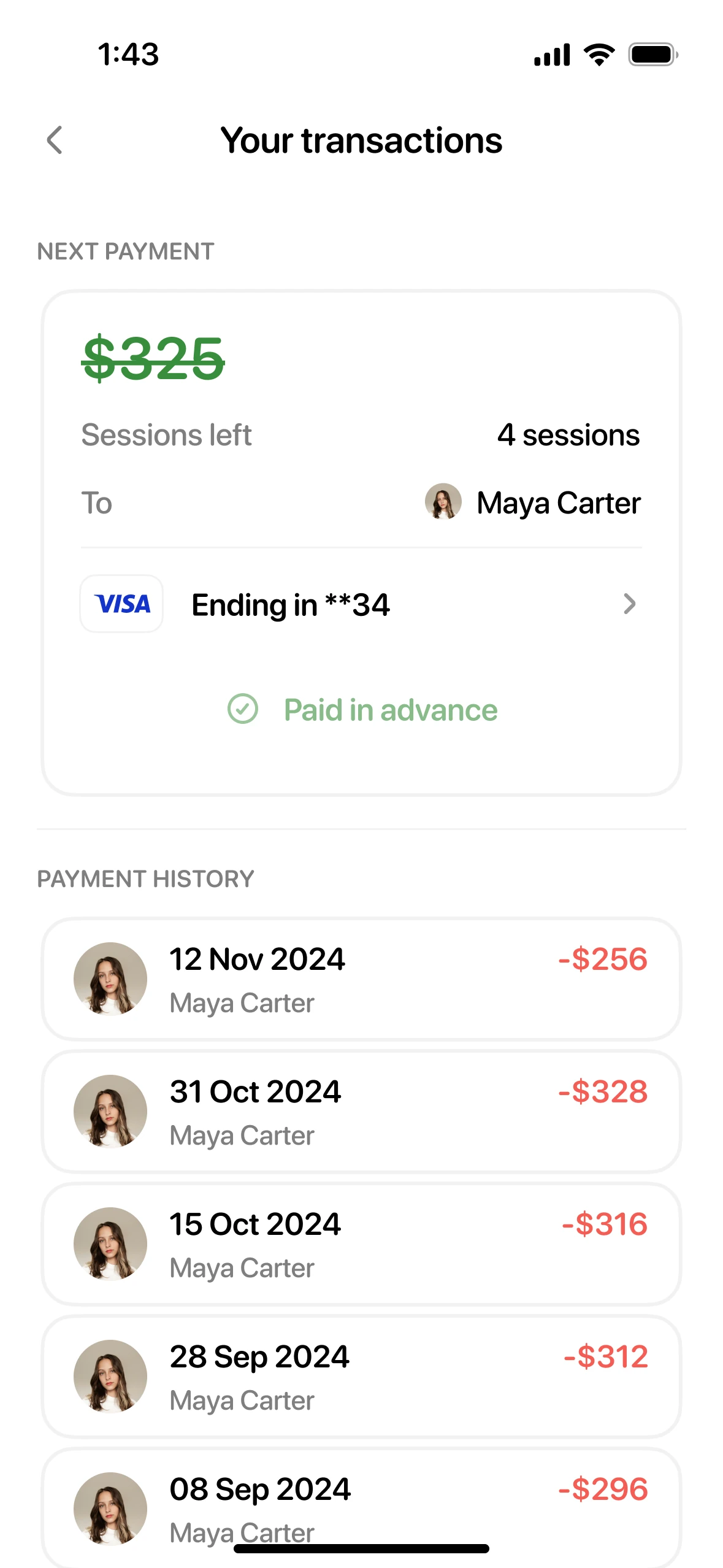
After receiving real market feedback, we moved billing from pay-after-training to prepaid credit: clients pay their trainer upfront, for a block of sessions. The next payment is a renewal, not a debt.
Before: pay after training
- The trainer sets how many sessions come before a payment.
- Sessions count down, then the card is charged.
- Missed payments carry over as debt.
After: prepaid credit per trainer
- The client tops up through Stripe.
- Each session draws the balance down.
- Auto top-up refills it below a chosen number of hours.
- New bookings stop at -$150.
Prepaid credit · Client with Trainer
Auto top-up Off
−$150
New bookings stop at −$150
- New bookingStopped
- Session−$75
- Session−$75
- Session−$75
A week of research would have caught it before any code. That is why every eclipt.ai project now starts with a free clickable prototype and market research.
Free clickable prototypeKey insights
- 01
Research the market before the build.
Billing is where a wrong assumption costs the most. We now check how the market really pays before we design the flow.
- 02
Draw every flow before you fix anything.
When the session and money logic got tangled, we stopped fixing and drew every flow. Signed off, the flowcharts became the spec for both sides.
- 03
Design the paywall to the store rules.
Most App Store rejections came from Apple’s in-app purchase rules for the trainer subscription, the rest from Sign in with Apple and iPad support. We now design to those rules from the first sketch.

Proof
- 5.0 App Store rating
- 2 of 2 Stores approved: App Store and Google Play
- 1.0–1.6 Seven App Store releases in under a month, each through Apple review